
The Art of Not Flying Blind with Crypto Portfolio Analysis
You’re Probably Flying Blind on Your Crypto Returns
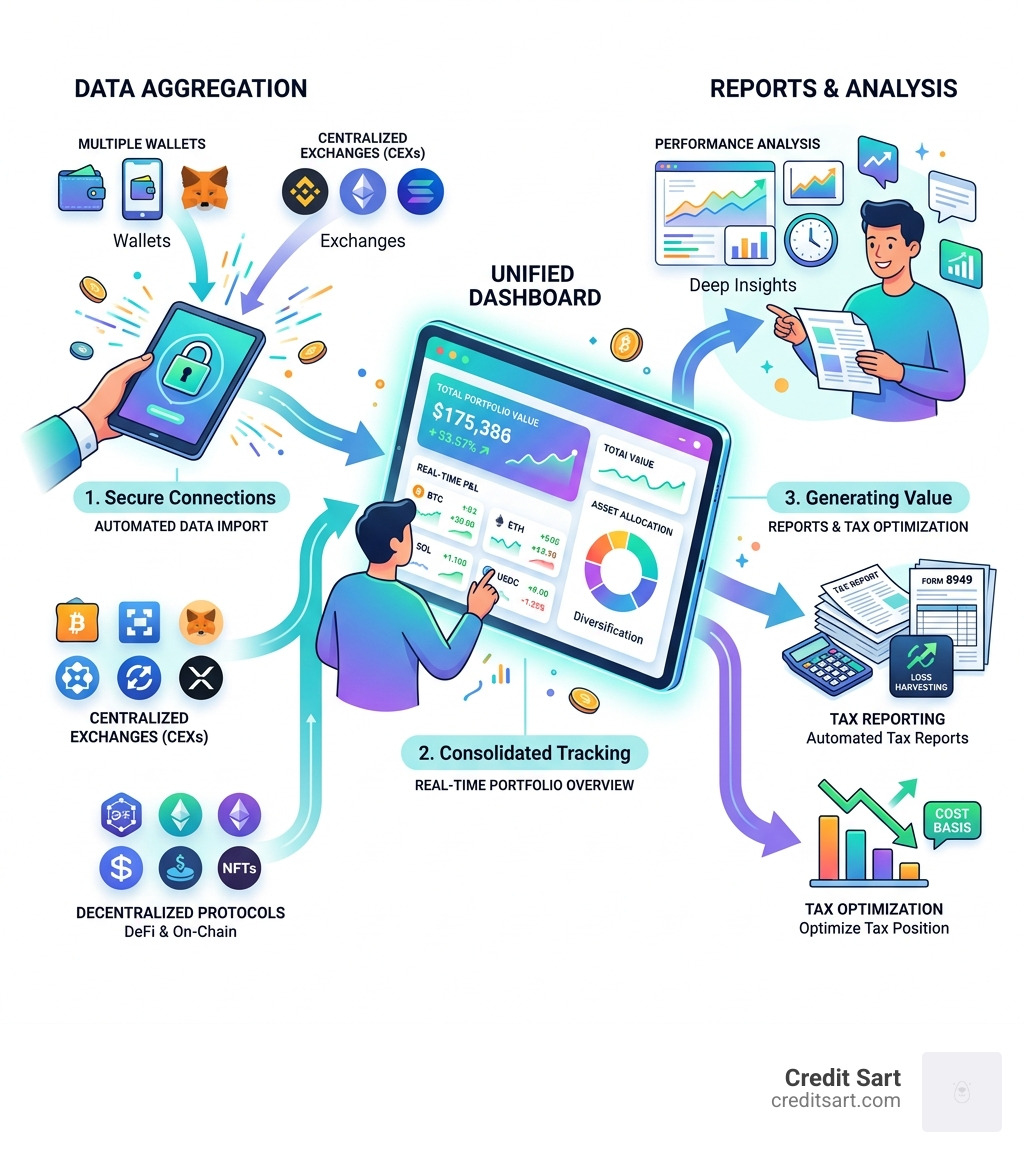
Crypto portfolio analysis is the process of tracking, measuring, and evaluating the performance of all your cryptocurrency investments across wallets, exchanges, and blockchains — in one place.
If you want a quick answer on how to do it effectively, here’s the core process:
- Connect your wallets and exchanges using read-only API keys or wallet addresses
- Track real-time profit and loss (PnL) across all your assets in one dashboard
- Monitor your cost basis and DCA to know exactly what each position is worth
- Review asset allocation to spot concentration risks early
- Generate tax reports (like IRS Form 8949) automatically when needed
Think about how many places your crypto actually lives. One wallet on MetaMask. Another on Coinbase. Some staked somewhere. Maybe an NFT or two. A few tokens sitting in a DeFi protocol you tried six months ago.
Now ask yourself: do you actually know what your total holdings are worth right now?
Most beginner investors don’t. And that’s not a failure — it’s just the reality of a market that moves across dozens of chains, thousands of coins, and hundreds of platforms simultaneously.
The crypto market in 2026 is bigger and more complex than ever. With over 20,000 coins tracked across platforms, and assets spread across DeFi protocols, NFTs, and staking positions, flying blind is genuinely risky. Not knowing your real returns — or your real losses — means you can’t make smart decisions about when to hold, rebalance, or exit.
The good news? The tools to fix this have gotten very good, very fast.
Why Every Investor Needs a Crypto Portfolio Tracker
In the early days of Bitcoin, you could get away with a simple Excel spreadsheet. You bought some BTC, noted the price, and checked it once a month. But in April 2026, the landscape has shifted. We are dealing with an explosion of “fragmented liquidity.” Your wealth is likely scattered across centralized exchanges (CEXs), decentralized exchanges (DEXs), and cold storage.
A dedicated tracker is essential because manual spreadsheets simply cannot keep up with the 24/7 volatility of the crypto market. If you have ten different assets, their prices are changing every second. By the time you update your spreadsheet, the data is already obsolete.
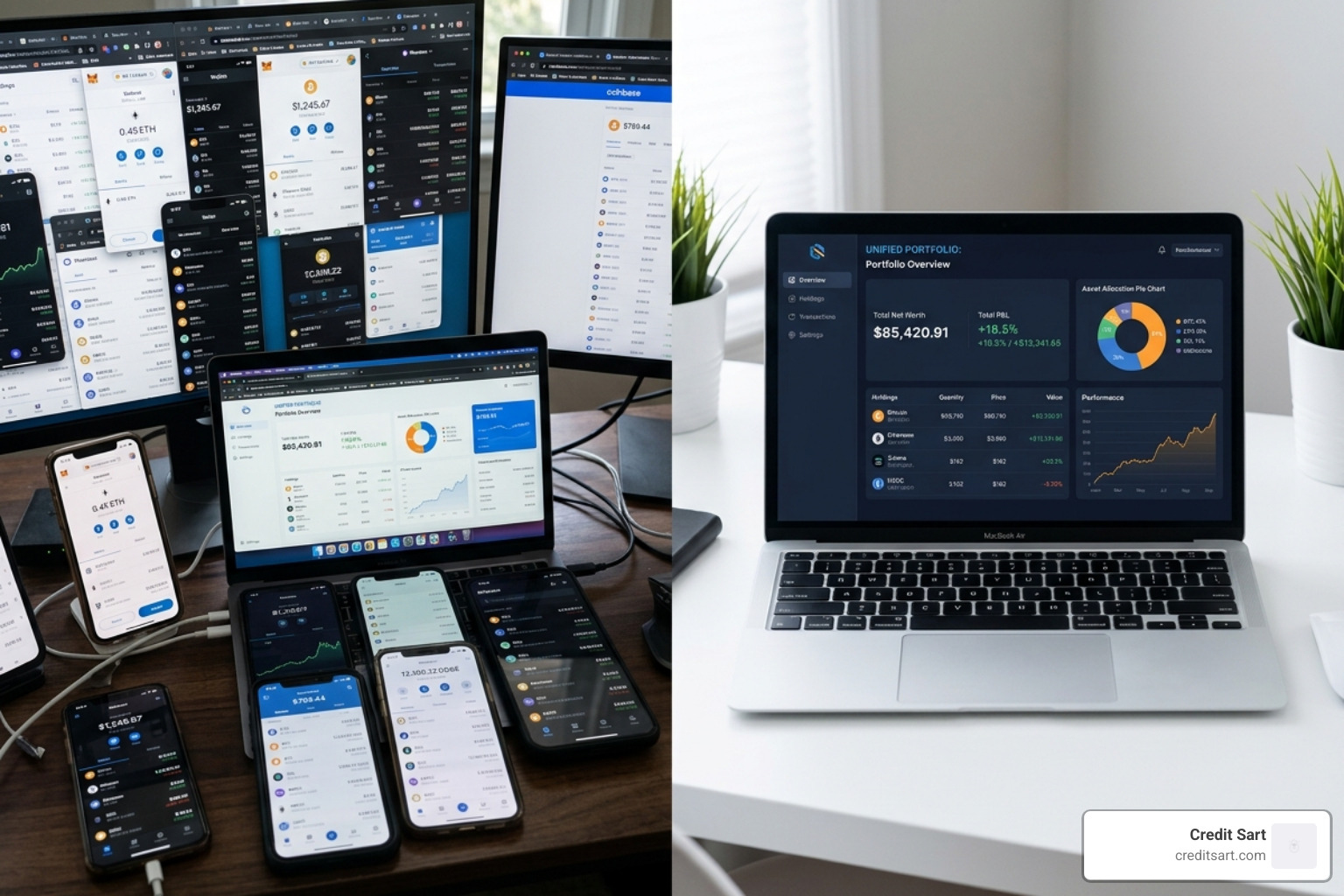
Beyond just knowing your balance, crypto portfolio analysis helps you manage risk. Are you too heavy in Solana-based memecoins? Is 90% of your net worth in a single staking protocol? Without a unified view, these concentration risks are hard to see. Modern trackers aggregate all this data into a single dashboard, giving you a “birds-eye view” of your financial health.
How to Get Started with Tracking
Getting started is much simpler than most people realize. You don’t need to manually type in every trade you’ve made since 2021. Here is how the pros do it:
- Exchange APIs: Most major exchanges allow you to generate a “read-only” API key. This acts as a secure bridge, allowing your tracker to see your transaction history without ever having the permission to move or withdraw your funds.
- Public Wallet Addresses: For “on-chain” assets like those in MetaMask, Ledger, or Phantom, you simply copy and paste your public wallet address. The tracker then scans the blockchain to pull in your balances and history automatically.
- Manual Entry: For those who prefer maximum privacy or have “off-book” trades, you can still enter transactions manually, though this is the most time-consuming method.
By using these automated methods, you can sync years of trading history in a matter of minutes, setting the stage for deep crypto portfolio analysis.
Key Features for Effective Crypto Portfolio Analysis
Not all tracking tools are created equal. To truly understand your performance, you need more than just a “Total Balance” number. You need granular data that explains the why behind your portfolio’s movements.
Key metrics to look for include:
- PnL (Profit and Loss): This should be broken down into “Realized PnL” (money you’ve actually locked in by selling) and “Unrealized PnL” (paper gains or losses).
- Cost Basis: This is the average price you paid for your coins. Knowing your cost basis is the only way to know if a “dip” is actually a buying opportunity or if you are still in the green.
- Asset Allocation: A good analysis tool will show you a pie chart of your holdings by asset type (Stablecoins, Layer 1s, DeFi, NFTs) and by chain (Ethereum, Solana, Bitcoin).
To help you decide which path to take, we’ve broken down the typical differences between free and premium tracking experiences:
| Feature | Free Trackers | Premium Trackers |
|---|---|---|
| Transaction Limit | Often capped (e.g., 100–1,000) | Unlimited or very high limits |
| Exchange Syncing | Limited number of connections | 300+ exchanges and wallets |
| DeFi & NFTs | Basic or delayed tracking | Real-time, multi-chain support |
| Tax Reporting | Preview only or basic export | Full IRS Form 8949 & Schedule D |
| Analytics | Basic PnL | AI insights, social sentiment, & exit plans |
Real-Time Performance and DCA Tracking in Crypto Portfolio Analysis
One of the most powerful features of modern crypto portfolio analysis is the ability to track Dollar-Cost Averaging (DCA). Many of us buy small amounts of Bitcoin or Ethereum every week. Over time, it becomes impossible to track which specific “buy” is performing well.
Advanced trackers provide a per-purchase breakdown. This helps you identify which entries were successful and which ones might be “dead weight.” Combined with real-time price alerts, you can set “exit strategies” — pre-determined price points where you plan to take profits. This removes the emotional “greed” factor that often leads investors to hold too long during a bull market.
Leveraging AI and Social Sentiment for Crypto Portfolio Analysis
As we move through 2026, Artificial Intelligence has become a staple in portfolio management. Some trackers now offer AI-driven price predictions based on historical market cycles and “Midas” algorithms that track what “Smart Money” (whales and institutional investors) is doing.
Social sentiment is another huge factor. By aggregating signals from platforms like X (formerly Twitter), these tools can tell you if a coin is being “shilled” into a bubble or if there is genuine community growth. Combining on-chain data with social intelligence gives you an “edge” that a simple price chart never could.
Advanced Support for DeFi, NFTs, and Multi-Chain Assets
The “old school” trackers only cared about Bitcoin and Ethereum. Today, crypto portfolio analysis must cover the entire ecosystem. Top-tier platforms now support 17+ chains and over 100 protocols.
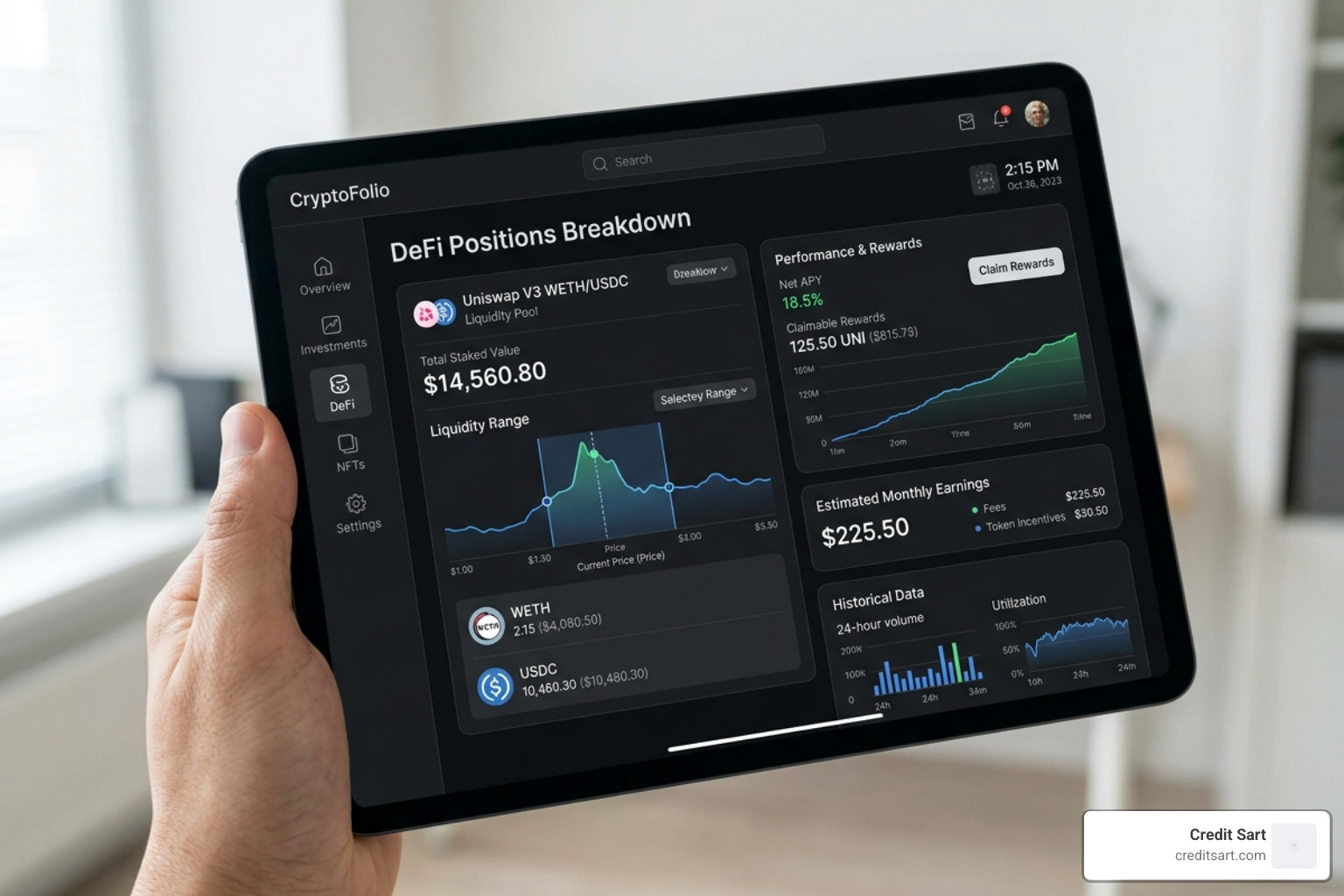
If you are a DeFi user, you know the struggle of tracking “yield farming” positions or liquidity pools. Your assets aren’t just sitting in a wallet; they are “working” in a contract. Modern trackers can “look inside” these protocols to show you your earned interest, APY, and even potential “impermanent loss” in real-time.
Tracking Non-Fungible Tokens and Staking
NFTs are no longer just pictures; they are significant financial assets. A robust tracker will monitor “floor prices” and rarity traits across various marketplaces. Instead of manually checking OpenSea or Magic Eden, you can see your NFT collection’s value alongside your liquid tokens.
Staking rewards also require special attention. Whether you are staking SOL, ETH, or DOT, these rewards often hit your wallet in small, frequent increments. A tracker that offers automated syncing ensures that your “total value” always includes these accrued rewards, which is vital for both performance tracking and tax compliance.
Security Standards and Tax Reporting Compliance
When you connect your life savings to a software tool, security is the only thing that matters. We always look for platforms that use AES-256 encryption — often referred to as “military-grade” security.
The most important rule? Never give a tracker “Trade” or “Withdraw” permissions. By using read-only access, you ensure that even if the tracking platform were compromised, your actual assets remain safe on the exchange or in your hardware wallet.
Navigating Global Tax Regulations
Tax season is the “final boss” for crypto investors. If you’ve made hundreds of trades across different chains, calculating your capital gains manually is a nightmare. This is where crypto portfolio analysis becomes a legal necessity.
Most professional trackers can now generate:
- IRS Form 8949: The standard form for reporting capital gains and losses in the US.
- Schedule D: A summary of your total gains.
- Tax-Loss Harvesting Reports: These identify assets you are currently “down” on, allowing you to sell them to offset your gains and lower your total tax bill.
To optimize your taxes, you need to choose a “cost basis method.” Here is a quick comparison of the most common strategies used in 120+ supported countries:
| Method | Definition | Best For… |
|---|---|---|
| FIFO (First-In, First-Out) | The first coins you bought are the first ones sold. | Generally the IRS default method. |
| LIFO (Last-In, First-Out) | The most recent coins you bought are sold first. | Can be useful in a falling market. |
| HIFO (Highest-In, First-Out) | The most expensive coins you bought are sold first. | Minimizing immediate capital gains. |
Frequently Asked Questions about Portfolio Tracking
Are crypto portfolio trackers safe to use?
Yes, provided you follow the “read-only” rule. Most reputable trackers never ask for your private keys or seed phrases. By only providing public wallet addresses or read-only API keys, you are simply allowing the software to “view” your balance, not touch it.
Can I track my DeFi and NFT positions for free?
Many platforms offer a free tier that includes basic DeFi and NFT tracking. However, these are often limited by the number of transactions or the number of chains they can scan. For a truly “multi-chain” experience involving dozens of protocols, a premium plan is usually required.
How do trackers help with IRS tax compliance?
They act as a centralized record-keeper. They take all your “buys” and “sells” from every different platform, match them up, and calculate the exact dollar-value gain or loss for every single trade. This data is then formatted exactly how the IRS (or your local tax authority) expects to see it.
Conclusion
At Credit Sart, we believe that the difference between a “gambler” and an “investor” is data. In the fast-moving world of 2026, you cannot afford to guess what your portfolio is worth. Crypto portfolio analysis isn’t just about watching numbers go up; it’s about having the clarity to know when to pivot, when to protect your gains, and how to stay compliant with the law.
By consolidating your wallets, monitoring your DCA, and leveraging AI insights, you move from “flying blind” to navigating the markets with a high-definition radar.
Start managing your crypto smarter today and turn your fragmented data into a clear strategy for the future.
